
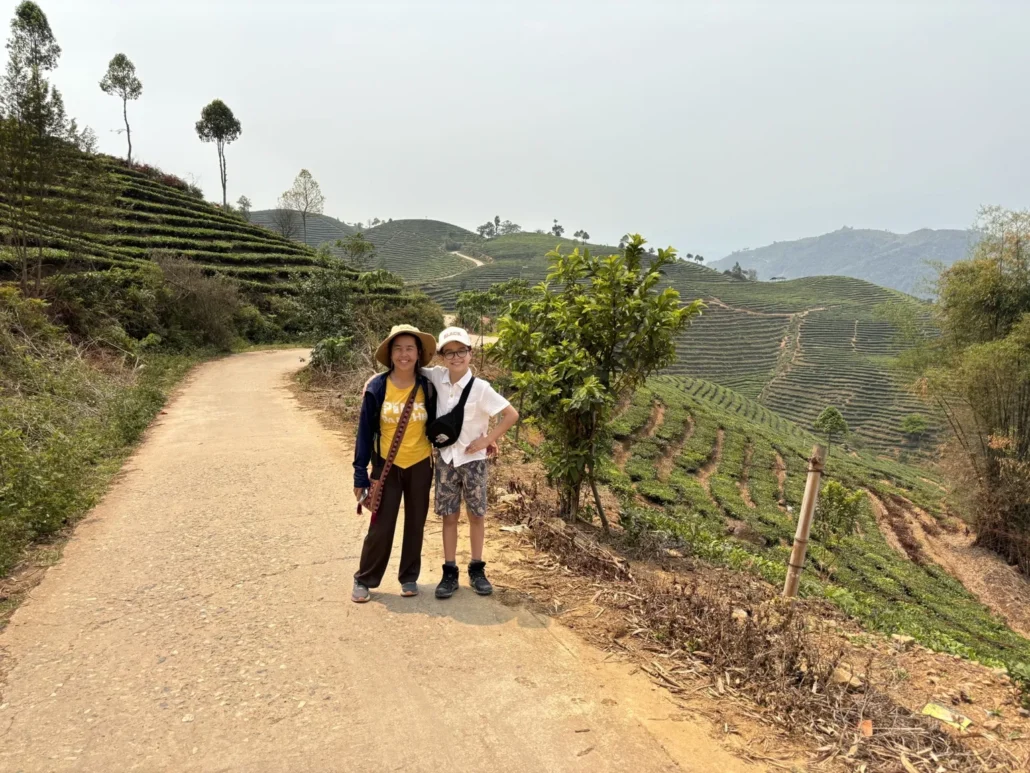
The ten things worth bringing
Most people arrive carrying far too much. Below is our Sapa trekking packing list, and the same for a Ha Giang tour, written by the guides who do both every week. It is shorter than you might expect. The homestays provide more than travellers assume, and a lot of what ends up in a backpack never comes out of it.
1. Mosquito spray. More useful in the evenings at the homestay than on the trail itself.
2. Sun cream. The mountain sun is stronger than it feels, particularly on overcast days when people forget about it entirely.
3. Lightweight clothing. Thin shirts and a hat. Long sleeves are worth having even in hot weather, both for the sun and for walking through vegetation.
4. Good shoes. In dry season trainers are genuinely fine, and most of our travellers wear them. Proper boots matter more in the wet months, when the limestone and clay get slippery, and on the harder routes.
5. A small backpack. Enough for a day’s water, a layer, a change of clothes if you are staying overnight, and whatever personal things you need. Everything else can stay behind.
6. A phone charger. The homestays have wifi and power, but bring your own cable.
7. Trail snacks. Lunch is included, but the gap between meals is long when you are walking all day.
8. Your passport. Required for the Fansipan trek, since it sits inside Hoang Lien National Park. Not needed for valley treks, though it is sensible to carry it anyway.
9. Warm clothes, November to February. The valley can drop to around 10°C at night, and because the air is humid it feels considerably colder than the same temperature at home. Homestays are not heated. A warm layer and something dry to sleep in makes the difference between a good night and a long one.
10. Something to swim in. There are hot springs down at Ban Ho and up at Tan Uyen. They are not far off the usual routes, so if you would like to stop, tell your guide when you book and we will work them into the trek.
If you are trekking in Sapa
You are on your feet most of the day, so weight matters more than anything else. A day pack, water, a layer, and that is really it.
The trails run through rice terraces, along mountain paths and across rivers on footbridges. In the wet months they get muddy, and mud is the main argument for boots over trainers. In summer, ask your guide about swimming spots along the way, several of the routes pass water worth getting into.
You can leave your main luggage at our office in Sapa town, before and after your trek. There is a shower with free towels, and somewhere to wash your shoes. Useful in both directions: if you arrive off the night train before your hotel room is ready, or if you are catching a train or bus a few hours after a muddy trek.
If you are riding in Ha Giang
Ha Giang is different because you are on a motorbike or in a car for several hours a day, covering 100 to 150km. Sitting still at altitude in moving air is colder than walking, so bring a layer more than you think you need, even in warm months.
A windproof and waterproof jacket is worth its space. So are sunglasses and something to cover your arms, because a full day of sun on the back of a bike catches people out.
Helmets are provided.
You leave your main luggage at Lila Inn in Ha Giang city and there is a shower there before and after your tour, so you only need a small bag for the road. Bring your passport.
What you can leave at home
This is the part most people get wrong. The homestays provide:
- Towels
- Bedsheets
- Soap and basic toiletries
- Wifi
- Drinks, which you can buy there
Water for the whole trek is the big one. Carry a day’s worth. You can buy more along the way and at the homestays, so there is no reason to set off with five days of it on your back. The exception is the routes that go off the main trails, where there is less to buy, so bring extra if your guide suggests it.
What the homestays do not provide is a toothbrush and toothpaste, so bring your own. There is power for charging, but a cable that fits your phone is not something to count on.